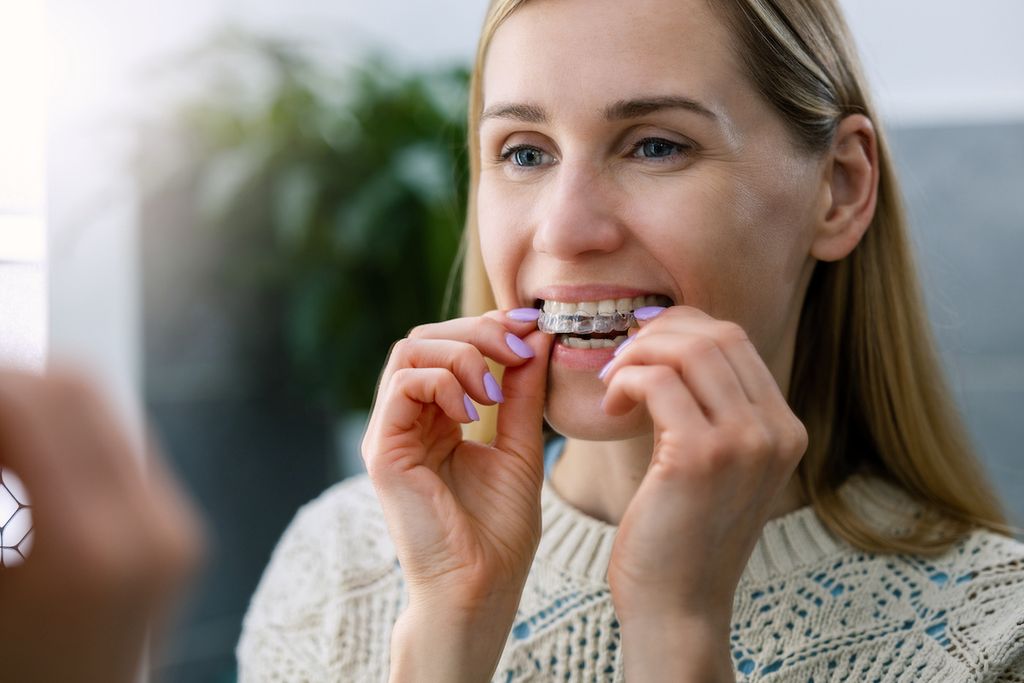

Braces and clear aligners may get most of the attention in orthodontics, but sometimes your smile needs a little extra help along the way.
That’s where orthodontic appliances come in.
From expanders that help guide jaw development to retainers that protect your finished smile, orthodontic appliances can serve a number of important purposes before, during, and after treatment.
If Dr. Lu or Dr. Schneider has recommended an appliance for you or your child, you may be wondering: What exactly does it do? Why do I need it? And what will it feel like?
We’re breaking down some of the most common orthodontic appliances we use at First Impression Orthodontics and how each one can play a role in helping you become your best self.

TL;DR: Orthodontic Appliances at a Glance
Orthodontic appliances are devices that help guide jaw growth, create or maintain space, correct bite problems, move teeth, or protect your results after treatment.
At First Impression Orthodontics, common appliances include:
- Palatal expanders: Widen the upper jaw or arch
- Forsus, Herbst & CS5 appliances: Help correct certain bite problems
- Nance appliances & lower lingual arches: Help maintain space for developing teeth
- Separators/spacers: Create small amounts of space between teeth
- TADs: Provide extra support for precise tooth movement
- Retainers: Help keep teeth in position after treatment
Not every patient needs an appliance. Dr. Lu and Dr. Schneider will recommend one only when it can help achieve a specific goal in your personalized treatment plan.
What Are Orthodontic Appliances?
Orthodontic appliances are devices used to help move teeth, influence jaw growth, create or maintain space, correct bite problems, or preserve the results of orthodontic treatment.
Some are removable, while others are temporarily attached to the teeth. Certain orthodontic treatment appliances work alongside braces, while others may be used before braces or clear aligners even begin.
And no, needing an appliance doesn’t necessarily mean your treatment is more complicated.
It simply means your smile needs a specific type of support to achieve the result we’re working toward.
Why Do I Need an Orthodontic Appliance?
Every smile develops differently. Depending on your teeth, bite, jaw development, age, and treatment goals, Dr. Lu or Dr. Schneider may recommend an appliance to address a specific orthodontic concern.
Different orthodontic appliances can help:
- Create more room for crowded or developing teeth
- Guide jaw growth and development
- Correct certain overbites, underbites, or crossbites
- Improve how the upper and lower jaws fit together
- Help braces move teeth more efficiently
- Maintain space for permanent teeth
- Provide additional support for complex tooth movements
- Keep teeth in their new positions after treatment
At FIO, there’s no one-size-fits-all approach. Dr. Lu and Dr. Schneider create personalized treatment plans based on what your smile actually needs.
Common Types of Orthodontic Appliances
So, what might that little device in your mouth actually be doing?
Here’s your FIO guide to some of the common orthodontic appliances we use for children, teens, and adults.
Palatal Expander
A palatal expander is designed to gradually widen the upper jaw.
Expanders are often used for growing children whose upper jaw is too narrow. Creating additional width can help make room for developing permanent teeth and improve how the upper and lower jaws fit together.
A palatal expander may also be recommended to help address certain crossbites or crowding.
Because children’s jaws are still developing, expansion at the right time can sometimes create space and improve jaw relationships before all of the permanent teeth have erupted.
Separators or Spacers
Orthodontic separators, often called spacers, are small elastic rings placed between certain teeth.
Their job is simple: create a tiny amount of space.
Spacers may be placed before braces or another appliance so orthodontic bands can fit comfortably around the teeth. They’re usually temporary and only need to stay in place long enough to create the necessary room.
They may feel snug at first, almost like having a small piece of food stuck between your teeth, but that pressure is a sign that they’re doing their job.
Forsus Fatigue-Resistant Device
The Forsus Fatigue-Resistant Device is a fixed appliance that can be used with braces to help correct certain bite problems, particularly an excessive overjet associated with a Class II bite.
Unlike removable elastics that depend on remembering to put them back in, the Forsus appliance stays in place and provides continuous force.
It connects the upper and lower braces and helps guide the relationship between the upper and lower teeth as treatment progresses.
Herbst Appliance
The Herbst appliance is another device commonly used to address certain Class II bite relationships in growing patients.
It connects the upper and lower jaws with small metal components that hold the lower jaw in a more forward position. Over time, the appliance can help influence jaw development while improving the way the upper and lower teeth come together.
Because timing matters when working with jaw growth, the Herbst appliance is most often recommended for children or teens who are still developing.
CS5 Appliance
A CS5 appliance can also be used as part of treatment for certain bite corrections.
It works with the braces to apply continuous force that helps improve the relationship between the upper and lower teeth. Because it is fixed in place, patients don’t have to remember to wear and replace removable components throughout the day.
Whether a CS5, Forsus, Herbst, or another approach makes the most sense depends on the patient’s bite, growth, and overall treatment plan.
Nance Appliance
A Nance appliance is used to help maintain space in the upper arch.
It typically consists of bands around the back molars connected by a wire and a small acrylic button that rests against the roof of the mouth.
The appliance helps prevent the upper molars from moving forward when maintaining space is important for developing or erupting permanent teeth.
Lower Lingual Arch
A lower lingual arch serves a similar space-maintaining purpose in the lower jaw.
The appliance usually consists of bands around the lower molars connected by a wire that runs along the inside of the lower teeth.
It can help preserve valuable space as a child’s primary teeth are lost and permanent teeth begin to erupt. Because it sits behind the teeth, it is relatively discreet.
Temporary Anchorage Devices (TADs)
Temporary anchorage devices, or TADs, are small orthodontic devices that provide a stable anchor point for moving teeth.
Think of them as giving your orthodontist an extra point of leverage.
In certain cases, braces alone may not provide the precise anchorage needed to move a tooth, or group of teeth, in the desired direction. A TAD can provide that support, allowing Dr. Lu or Dr. Schneider to plan highly controlled tooth movements.
TADs are temporary, and once they’ve served their purpose in your treatment plan, they’re removed.
Retainers
Your orthodontic journey doesn’t end the day your braces come off or you finish your last set of clear aligners.
Retainers help hold your teeth in their new positions and protect the smile you worked so hard to achieve.
Teeth naturally have a tendency to shift over time, which is why retention is an essential part of long-term orthodontic treatment. Depending on your needs, your orthodontist may recommend a removable or fixed retainer and provide instructions for how often it should be worn.
Consider your retainer the final member of your smile team. It may not get the glory braces-off day does, but it has a very important job.
Orthodontic Appliances for Children vs. Adults
You may notice that many orthodontic appliances are associated with treatment for children and teens. There’s a reason for that.
While a child is still growing, an orthodontist may be able to use that growth strategically. Orthodontic appliances for children, such as palatal expanders and Herbst appliances, can help guide developing jaws or create space at an ideal stage of development.
Adults can need orthodontic appliances too.
Orthodontic appliances for adults, including TADs and certain braces appliances, can help accomplish specific tooth movements and bite corrections even after jaw growth is complete.
Age alone doesn’t determine which appliance is appropriate. Your orthodontist will consider your jaw structure, tooth positions, bite, growth, goals, and other factors before recommending treatment.
What Should I Expect With an Orthodontic Appliance?
Getting used to a new appliance can take a little time.
You may initially notice extra pressure, mild soreness, changes in speech, or simply the strange feeling of having something new in your mouth. Most patients adjust as they become accustomed to their appliance.
We’ll also show you how to care for it, keep it clean, and protect it throughout treatment.
Most importantly, ask questions. If you don’t understand what your appliance does, how to care for it, or why it’s part of your treatment, we want to know.
Your smile may be our area of expertise, but it’s still your smile.
Personalized Orthodontic Treatment in Alexandria, VA
There are plenty of types of orthodontic appliances, but that doesn’t mean you’ll need all, or even any, of them.
At First Impression Orthodontics in Alexandria, Dr. Lu and Dr. Schneider personalize treatment for kids, teens, and adults based on each patient’s smile, lifestyle, and goals.
Whether your path includes metal braces, high-efficiency clear braces, clear aligners, an orthodontic appliance, or a combination of treatments, we’ll explain what we’re recommending and how each step helps move you closer to your best smile.
Ready to find out what your smile needs? Schedule a complimentary consultation at our Alexandria orthodontic office and take the first step toward your best self.
Orthodontic Appliances: Frequently Asked Questions
What are the most common orthodontic appliances?
Common orthodontic appliances include palatal expanders, spacers, space maintainers, bite-correction appliances, TADs, and retainers. Braces and clear aligners are also orthodontic devices used to move teeth. The appliances recommended for you will depend on your individual treatment needs.
Are orthodontic appliances always used with braces?
No. Some orthodontic appliances for braces work alongside brackets and wires to accomplish specific movements or bite corrections. Others may be used before braces, during early orthodontic treatment, or after active treatment is complete.
Do orthodontic appliances hurt?
It’s normal to experience some pressure or mild soreness when an appliance is first placed or adjusted. This typically improves as your mouth adapts. If you’re experiencing significant or persistent discomfort, contact your orthodontic team.
How long will I need to wear an orthodontic appliance?
It depends on the appliance and what it’s designed to accomplish. Some are used for a relatively short stage of treatment, while others may remain in place for several months. Retainers are different: they’re used long-term to help maintain your results.
How do I know which orthodontic appliance I need?
You don’t have to figure that part out yourself! Dr. Lu or Dr. Schneider will evaluate your teeth, bite, jaw relationships, and treatment goals before determining whether an appliance would benefit your smile. If one is recommended, we’ll explain what it does and why it’s part of your personalized treatment plan.