
If you’re thinking about upgrading your oral hygiene routine, you’ve probably come across two popular options: sonic toothbrushes and electric toothbrushes. While both can clean your teeth more effectively than a manual toothbrush, they work differently and offer unique benefits.
So which one is right for you?
The answer depends on your oral health needs, personal preferences, and whether you’re currently undergoing orthodontic treatment. Here’s what you should know.
What Is an Electric Toothbrush?
An electric toothbrush uses a powered motor to move the brush head automatically. Most traditional electric toothbrushes use oscillating or rotating technology, meaning the brush head spins back and forth to remove plaque and debris from the teeth and gumline.
Electric toothbrushes are popular because they:
- Require less brushing effort
- Remove plaque effectively
- Help improve brushing consistency
- Include built-in timers and pressure sensors
- Make brushing easier for children and adults
Many orthodontic patients find electric toothbrushes easier to use because they help clean around brackets, wires, and other orthodontic appliances.
What Is a Sonic Toothbrush?
A sonic toothbrush is a type of electric toothbrush, but it operates at a much higher frequency.
Instead of relying primarily on rotating movements, sonic toothbrushes create rapid vibrations that generate thousands of brush strokes per minute. These vibrations help move fluid between teeth and along the gumline, allowing the brush to clean areas that may be difficult to reach with traditional brushing.
Sonic toothbrushes are designed to:
- Clean between teeth more effectively
- Improve gum health
- Reach difficult areas
- Create a gentle brushing experience
- Support plaque removal along the gumline
Sonic vs. Electric Toothbrushes: What’s the Difference?
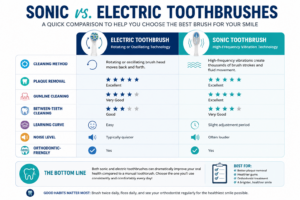
The biggest difference is how they clean.
Traditional electric toothbrushes rely mainly on mechanical rotation or oscillation of the brush head. Sonic toothbrushes use high-frequency vibrations that create additional cleaning action through fluid movement around the teeth and gums.
Which Toothbrush Is Better for Braces?
Patients with braces need to clean around brackets, wires, and other areas where plaque can accumulate.
Both sonic and electric toothbrushes can be effective during orthodontic treatment. The best toothbrush is often the one that helps you brush thoroughly and consistently every day.
For many braces patients, sonic toothbrushes may provide an advantage because their vibrations help move fluid around brackets and wires. However, a high-quality oscillating electric toothbrush can also provide excellent results when used correctly.
Which Toothbrush Is Better for Clear Aligners?
Clear aligner patients must brush frequently throughout the day to keep their teeth and aligners clean.
Because clear aligner treatment requires brushing after meals and snacks, many patients appreciate toothbrushes that are efficient, gentle on gums, and easy to use consistently.
Both sonic and electric toothbrushes can work well for clear aligner users.
Are Sonic Toothbrushes Better for Gum Health?
Healthy gums are essential for a healthy smile.
Some studies suggest sonic toothbrushes may provide additional benefits for gum health because their high-frequency vibrations help disrupt plaque along the gumline. However, proper brushing technique remains more important than the specific type of toothbrush you choose.
The most effective toothbrush is one you use correctly every day.
What Features Should You Look for?
Whether you choose a sonic or traditional electric toothbrush, consider features such as:
- Built-in timer
- Pressure sensor
- Multiple cleaning modes
- Long battery life
- Replaceable brush heads
- Comfortable grip
- ADA acceptance when available
These features can help improve your brushing habits and protect your teeth and gums.
Can a Toothbrush Replace Flossing?
No.
Even the most advanced toothbrush cannot completely replace flossing or other interdental cleaning methods.
Brushing removes plaque from the surfaces of teeth, while flossing cleans between teeth where toothbrush bristles cannot fully reach.
For the best oral health results:
- Brush twice daily
- Floss every day
- Use any orthodontic cleaning aids recommended by your orthodontist
- Attend regular dental cleanings
So Which One Should You Choose?
There is no one-size-fits-all answer.
A traditional electric toothbrush may be ideal if you prefer rotating brush heads and a familiar brushing experience.
A sonic toothbrush may be a good choice if you want powerful cleaning action, excellent gumline care, and enhanced cleaning between teeth.
Most importantly, choose a toothbrush that you enjoy using consistently. Good brushing habits will always have a greater impact on your oral health than the specific type of powered toothbrush you select.
## Keeping Your Smile Healthy During Orthodontic Treatment
At First Impression Orthodontics in Alexandria VA, we help patients maintain healthy teeth and gums throughout braces and clear aligner treatment. Proper brushing, flossing, and oral hygiene habits play a critical role in achieving the best orthodontic results.
If you have questions about oral hygiene, orthodontic treatment, or the best tools for caring for your smile, our team is happy to help. Schedule a complimentary appointment with Dr. Lu or Dr. Schneider today!
Choosing the Right Toothbrush During Orthodontic Treatment in Alexandria, VA
Whether you choose a sonic toothbrush or a traditional electric toothbrush, the most important factor is maintaining consistent oral hygiene throughout orthodontic treatment. Patients with braces, Invisalign®, and other orthodontic appliances often benefit from powered toothbrushes because they can help remove plaque around brackets, wires, and aligners more effectively than manual brushing alone.
At First Impression Orthodontics, our team works with patients throughout Alexandria, Springfield, Kingstowne, Franconia, and the surrounding Northern Virginia communities to help them maintain healthy smiles during treatment. Good brushing habits are essential for preventing cavities, protecting gum health, and achieving the best orthodontic results.
If you’re unsure which toothbrush is right for your specific orthodontic needs, our team can provide personalized recommendations based on your treatment plan and oral health goals.
Meet the Orthodontists at First Impression Orthodontics
Orthodontic treatment is about more than straightening teeth—it’s about creating healthy, functional smiles that last a lifetime. Our experienced orthodontists work closely with patients of all ages to develop customized treatment plans using braces, clear aligners, and other advanced orthodontic solutions.
Learn more about our doctors and their commitment to patient care by learning more about Dr. Lu and Dr. Schneider.
Visit Our Alexandria Orthodontic Office
First Impression Orthodontics proudly serves patients throughout Alexandria, Kingstowne, Springfield, Franconia, Fort Belvoir, and nearby Northern Virginia communities. If you’re considering braces or Invisalign treatment, we invite you to schedule a consultation and discover the difference personalized orthodontic care can make.
Visit our Alexandria Orthodontic Office page for directions, office hours, and appointment information.
Frequently Asked Questions
Is a sonic toothbrush better than an electric toothbrush?
Both are effective at removing plaque and improving oral hygiene. Sonic toothbrushes use high-frequency vibrations, while traditional electric toothbrushes use rotating or oscillating movements. The best choice depends on your preferences and oral health needs.
What is the difference between a sonic and electric toothbrush?
A traditional electric toothbrush uses a rotating or oscillating brush head, while a sonic toothbrush uses rapid vibrations to create additional cleaning action around the teeth and gums.
Are sonic toothbrushes good for braces?
Yes. Sonic toothbrushes can help clean around brackets and wires and may improve plaque removal in hard-to-reach areas during orthodontic treatment.
Are electric toothbrushes good for Clear Aligners like Invisalign?
Yes. Electric toothbrushes can help clear aligner patients clean their teeth efficiently before reinserting aligners after meals and snacks.
Do sonic toothbrushes clean better between teeth?
Sonic toothbrushes create fluid movement that may help clean between teeth and along the gumline more effectively than traditional brushing alone.
Can children use sonic toothbrushes?
Yes. Many sonic toothbrush models are designed specifically for children and can help encourage better brushing habits.
Do I still need to floss if I use a sonic toothbrush?
Yes. Neither sonic nor electric toothbrushes replace flossing. Daily flossing remains important for cleaning between teeth.
How often should I replace my toothbrush head?
Most manufacturers recommend replacing brush heads every three months or sooner if the bristles become worn.
Is a sonic toothbrush better for braces?
Sonic toothbrushes can be particularly helpful for braces because their high-frequency vibrations help clean around brackets and wires where plaque tends to accumulate.
Should I use an electric toothbrush with Invisalign?
Yes. Electric and sonic toothbrushes can both help Invisalign patients maintain excellent oral hygiene by removing plaque efficiently before aligners are reinserted.
How often should orthodontic patients replace toothbrush heads?
Patients with braces should generally replace brush heads every three months or sooner if the bristles become worn or frayed.